How do we factor by grouping ?
- When you factor your taking out common terms so you need to group them , for example :
x^3+3x^2-4x-12
First factor the first half of the equation : x^3+3x^2
this becomes : x^2(x+3) because you take out the common factor and make it so that if you foil it you get what the original half of the equation was.
Second ,now you do the same thing to the other half of the equation: 4x-12
this becomes 4(x+3) because four can come out of each term
Third , you can now combine like terms (x^2 +4) (x+3)
but one of the terms can be simplified still so;
The final equation becomes (x+2)(x+2)(x+3)
Sunday, December 9, 2012

Sunday, December 2, 2012
absolute value inequalities 9/13/12
How do we solve absolute value inequalities ?
-The purpose of absolute value is to change negative numbers to postive numbers
-When applying absolute value to inequalites you will have 2 'x' values representing the absolute value Example:
solve for 'x"1st: l 5x-7 l>8
add 7 to both sides : l 5x l >15
then divide 5 from both sides to isolate the x :
l x l>3
Now you need to flip the signs:
l 5x-7 l<-8
add 7 to both sides:
l 5x l <-1
now divide 5 from both sides to isolate 'x'
l x l <-1
Your results are :
l x l <-1
l x l <-8
-The purpose of absolute value is to change negative numbers to postive numbers
-When applying absolute value to inequalites you will have 2 'x' values representing the absolute value Example:
solve for 'x"1st: l 5x-7 l>8
add 7 to both sides : l 5x l >15
then divide 5 from both sides to isolate the x :
l x l>3
Now you need to flip the signs:
l 5x-7 l<-8
add 7 to both sides:
l 5x l <-1
now divide 5 from both sides to isolate 'x'
l x l <-1
Your results are :
l x l <-1
l x l <-8
Saturday, November 10, 2012
imaginary numbers
How do we use imaginary numbers ?
-We define the square root of -1 as "i". This is also called an imaginary unit.
-We call the 'i' solution to the equation ; i^2+1=0
Simplfying imaginary numbers example
What is the square root of -25 ?
- first notice that there shouldnt be any negative numbers under a radical , this means that there is no real solution , so your going to solve for the no solution.
so this will simplify to |25 and |-1
Now that 'i' is equivalent to the square root of -1 you can plug it in so the result will be 5i
What is the square root of -17?
this simplifies to |17 & |-1
now use 'i' in place of negative -1 and this becomes ; i|17
Notice that when the number is rational 'i' goes after the number and when the number is irrational the'i' goes before the number.
Note : there was no radical sign so I used "|" in place of it
-We define the square root of -1 as "i". This is also called an imaginary unit.
-We call the 'i' solution to the equation ; i^2+1=0
Simplfying imaginary numbers example
What is the square root of -25 ?
- first notice that there shouldnt be any negative numbers under a radical , this means that there is no real solution , so your going to solve for the no solution.
so this will simplify to |25 and |-1
Now that 'i' is equivalent to the square root of -1 you can plug it in so the result will be 5i
What is the square root of -17?
this simplifies to |17 & |-1
now use 'i' in place of negative -1 and this becomes ; i|17
Notice that when the number is rational 'i' goes after the number and when the number is irrational the'i' goes before the number.
Note : there was no radical sign so I used "|" in place of it
Tuesday, November 6, 2012
The discriminant (10/23/12)
How do we apply our quadratic knowledge to real world situations?
The quadratic equation :

Underneath the radical of the quadratic equation above, lies The Discriminant
B^2- 4ac
Rules of the discriminant :
b^2-4ac>0 - you'll get 2 solutions
b^2-4ac=0 - you'll get 1 solution
b^2-4ac<0 - you get 0 solutions
For example: x ^2 + 6x +9=0
label the letters to solve using the discriminant:
a=1
b=6
c=9
now plug it into the equation:
6^2-4(1)(-9) = 72
- referring back to the rules of the discriminant , the solution is greater than 0 so it has two solutions
-If b^2-4ac is a perfect square the two roots will be rational when you graph them
For example: x^2 +6x+8
a=1
b=6
c=8
plug into the formula : 6^2-4(1)(8)
the result is 4, since its a perfect square its rational
Next example: x^2 +3x-1
a=1
b=3
c=-1
plug into the formula :3^2-4(1)(-1)
this becomes: 9-4(1)(-1)
the result is 13 , since its not a perfect square its irrational
Cited works :
Let's be clear,http://paulpietrzak.blogspot.com/2011/01/solving-quadratic-equations-quadratic.html
The quadratic equation :

Underneath the radical of the quadratic equation above, lies The Discriminant
B^2- 4ac
Rules of the discriminant :
b^2-4ac>0 - you'll get 2 solutions
b^2-4ac=0 - you'll get 1 solution
b^2-4ac<0 - you get 0 solutions
For example: x ^2 + 6x +9=0
label the letters to solve using the discriminant:
a=1
b=6
c=9
now plug it into the equation:
6^2-4(1)(-9) = 72
- referring back to the rules of the discriminant , the solution is greater than 0 so it has two solutions
-If b^2-4ac is a perfect square the two roots will be rational when you graph them
For example: x^2 +6x+8
a=1
b=6
c=8
plug into the formula : 6^2-4(1)(8)
the result is 4, since its a perfect square its rational
Next example: x^2 +3x-1
a=1
b=3
c=-1
plug into the formula :3^2-4(1)(-1)
this becomes: 9-4(1)(-1)
the result is 13 , since its not a perfect square its irrational
Cited works :
Let's be clear,http://paulpietrzak.blogspot.com/2011/01/solving-quadratic-equations-quadratic.html
inverse of functions (10/3/12)
How do we calculate the inverse of functions?
- Two operations are said to be the inverse of each other if one of the operations undoes the other
-The inverse of f(x) can be calculated by swtiching the x & y values
For example : What is the inverse if f(x)=2x?
y=2x -------> x=2y
Then solve :
x/2=2y/2 ( the 2's on the right cancel out)
this then equals : x/2=y
- Using the inverse can also be applied to coordinates by switching the x & y as well
For example : What is the inverse of { (3,2)(-2,5)(6,0)}?
This equals : {(2,3)(5,-2)(0,6)}
- Two operations are said to be the inverse of each other if one of the operations undoes the other
-The inverse of f(x) can be calculated by swtiching the x & y values
For example : What is the inverse if f(x)=2x?
y=2x -------> x=2y
Then solve :
x/2=2y/2 ( the 2's on the right cancel out)
this then equals : x/2=y
- Using the inverse can also be applied to coordinates by switching the x & y as well
For example : What is the inverse of { (3,2)(-2,5)(6,0)}?
This equals : {(2,3)(5,-2)(0,6)}
Saturday, October 27, 2012
Quadratic equation
10/19/12
Aim: How do we solve quadratic equations?
Every parabola has an Axis of symmetry and a Vertex for example :

In order to determine the axis of symmetry , when given an equation you need to solve for (x).
- to solve for (x); use the equation (-b/2a)
Try this :
y=x^2 +6x+8
First label each of the variables to make it more clear :
a=1
b=6
c=8
Now you can use these numbers to solve for the axis of symmetry:
-6/2(1) ----> -6/3 = -2
The axis of symmetry/(x) = -2
Now using the (x) value you can solve for the vertex by plugging it into the equation
y=(-2)^2 + 6(-2)+8
y=0
This gives you the coordinate of the vertex : (-2,0)
Workcite
Northstarmath, http://www.northstarmath.com/sitemap/parabola.html
Aim: How do we solve quadratic equations?
Every parabola has an Axis of symmetry and a Vertex for example :
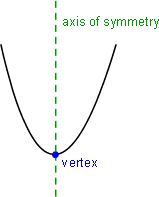
In order to determine the axis of symmetry , when given an equation you need to solve for (x).
- to solve for (x); use the equation (-b/2a)
Try this :
y=x^2 +6x+8
First label each of the variables to make it more clear :
a=1
b=6
c=8
Now you can use these numbers to solve for the axis of symmetry:
-6/2(1) ----> -6/3 = -2
The axis of symmetry/(x) = -2
Now using the (x) value you can solve for the vertex by plugging it into the equation
y=(-2)^2 + 6(-2)+8
y=0
This gives you the coordinate of the vertex : (-2,0)
Workcite
Northstarmath, http://www.northstarmath.com/sitemap/parabola.html
Sunday, May 6, 2012
5/3/12 How do we find the area of sectors and other parts of a circle?
How do we find the area of sectors and other parts of a circle?
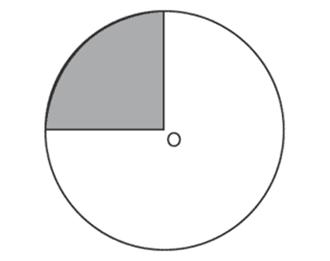
Sector of a circle
- a sector of a circle is the region between the radii and the arc of a sector
To find the area of a sector : # of degrees /360 x (pi) r^2
Ex:

Segment of a circle
- a segment of a circle is the region between a chord and arc of circle
To find the area of the segment of a circle : # of degrees/360 x (pi)r^ - 1/2bh
Ex:

Annulus
- an annulus is the region between two concentric circles
To find the area of the annulus : (pi)R^2- (pi)r1
Ex:

Practice question : If radius 1 is 12 and radius 2 is 6, What is the area of the annulus?
Citations
- Problem solving , http://www.p12.nysed.gov/ciai/mst/math/sampletasks/Math6Sample.htm
- Chord and segment of a circle, http://www.winpossible.com/lessons/Chord_and_Segment_Of_A_Circle.aspx, 2011
- Annulus calculator , http://www.calculatorsoup.com/calculators/geometry-plane/annulus.php
Sector of a circle
- a sector of a circle is the region between the radii and the arc of a sector
To find the area of a sector : # of degrees /360 x (pi) r^2
Ex:
Segment of a circle
- a segment of a circle is the region between a chord and arc of circle
To find the area of the segment of a circle : # of degrees/360 x (pi)r^ - 1/2bh
Ex:
Annulus
- an annulus is the region between two concentric circles
To find the area of the annulus : (pi)R^2- (pi)r1
Ex:
Practice question : If radius 1 is 12 and radius 2 is 6, What is the area of the annulus?
Citations
- Problem solving , http://www.p12.nysed.gov/ciai/mst/math/sampletasks/Math6Sample.htm
- Chord and segment of a circle, http://www.winpossible.com/lessons/Chord_and_Segment_Of_A_Circle.aspx, 2011
- Annulus calculator , http://www.calculatorsoup.com/calculators/geometry-plane/annulus.php
Subscribe to:
Posts (Atom)