Aim; How to do we graph trigonometric functions?
In order to graph trigonometric function you need to 1) beable to determine if a function is sin or cos , you also need to be able to determine 2) The amplitude, period and midline of a function .
A sin trig function views as;
A cos trig function views as;
The formula for a trigonometric function is y=Acos(Bx) or y=Asin(Bx)
- Now you need to find the amplitude, in order to find the amplitude of the you need to locate the maximum value and the minimum value and subtract them, you then divide that number by 2. Your result serves as your amplitude or your "A" in the function.
- To locate the period of the function or your(Bx) youll be using 2(pi) over the cycle number, which if you look above to the example are the numbers on the x -axis.
- in order to determine the midline locate the max and the minimum again and then add or you can visually determine the line that is in the middle of the function horizonally. This number will serve as the number you add or subtract in your function For example; y=Acos(bx) + 6. The six wouldve been the midline of a function.
Work cite for images only:
The biology project ,april 2006, http://www.biology.arizona.edu/biomath/tutorials/trigonometric/graphtrigfunctions.html
Properties of trigonometri fucntions,http://www.analyzemath.com/trigonometry/properties.html
Saturday, April 6, 2013
Sunday, March 17, 2013
2/25/13 How do we convert between radians and degrees?
How do we convert between Radians and Degrees ?
Reference angle - the smallest angle that the terminal side if the given angle makes with the x- axis
Radians - one radian is the angle subtended at the center of a circle by an arc that is equal length to the radius of the circle
1 radian = 180/pi = 57.2958
-To convert from Radians to degrees;
Example : 2(pi) x 180 / pi
The (pi) cancel each other out and you're left with (2x180) with equals 360 degrees
Example 2 : 5(pi) x 180/12(pi)
The pi cancel each other out then your left (5x180) = 900/12 then your final answer is 75 degrees
To convert from degrees to radians;
*Always leave in terms of pi when converting to radians
Example :
60/180(pi) = 1/3(pi) reduce ----> (pi)/3
Example 2 :
45/180(pi) = 11/12(pi) this can not be reduced
Bibliography (images only)
regentsprep.org ,http://www.regentsprep.org/Regents/math/algtrig/ATT3/referenceAngles.htm
Radians , mathisfun.com , http://www.mathsisfun.com/geometry/radians.html
Reference angle - the smallest angle that the terminal side if the given angle makes with the x- axis
Radians - one radian is the angle subtended at the center of a circle by an arc that is equal length to the radius of the circle
1 radian = 180/pi = 57.2958
-To convert from Radians to degrees;
Example : 2(pi) x 180 / pi
The (pi) cancel each other out and you're left with (2x180) with equals 360 degrees
Example 2 : 5(pi) x 180/12(pi)
The pi cancel each other out then your left (5x180) = 900/12 then your final answer is 75 degrees
To convert from degrees to radians;
*Always leave in terms of pi when converting to radians
Example :
60/180(pi) = 1/3(pi) reduce ----> (pi)/3
Example 2 :
45/180(pi) = 11/12(pi) this can not be reduced
Bibliography (images only)
regentsprep.org ,http://www.regentsprep.org/Regents/math/algtrig/ATT3/referenceAngles.htm
Radians , mathisfun.com , http://www.mathsisfun.com/geometry/radians.html
Sunday, January 20, 2013
1/7/13 how do we solve exponential equations ?
How do we solve exponential equations ?
How to solve 100 +10 ^x where the 'x' is unknown but you that 10 *10 is 100 so "x' equals 2
When the bases/ numbers are the same the exponents must be equal as well
solve for 3^x+4 = 3^7
first just set up the exponents like an equation : x+4 = 7 , the solve algebraically
x will equal =11
11 is the new exponent
Try this with ; 2 ^3x+7 = 2^5x-1
set up the exponents 3x+7 =5x-1 then solve algebraically
then end result will be that x= 4 this becomes the new exponent
How to solve 100 +10 ^x where the 'x' is unknown but you that 10 *10 is 100 so "x' equals 2
When the bases/ numbers are the same the exponents must be equal as well
solve for 3^x+4 = 3^7
first just set up the exponents like an equation : x+4 = 7 , the solve algebraically
x will equal =11
11 is the new exponent
Try this with ; 2 ^3x+7 = 2^5x-1
set up the exponents 3x+7 =5x-1 then solve algebraically
then end result will be that x= 4 this becomes the new exponent
1/713 how do we solve complex fractions?
How do we solve complex fractions?
When you see a complex fraction , it usual consists of another fraction for example;
1/1/3
The first step its rewrite it as 1 divided by 1/3
Then you do the reciprocal to the "1/3" so you can turn the divisor bar into multiplication so it become 3/1 or 3
Then it becomes1*3 and the end result is 3
Try with another example :
1/1/x+1
so first write it as 1 divided by 1/x+1
then do the reciprocal to change the sign so it becomes multiplication ; 1* x+1
now multiply and your result becomes x+1
When you see a complex fraction , it usual consists of another fraction for example;
1/1/3
The first step its rewrite it as 1 divided by 1/3
Then you do the reciprocal to the "1/3" so you can turn the divisor bar into multiplication so it become 3/1 or 3
Then it becomes1*3 and the end result is 3
Try with another example :
1/1/x+1
so first write it as 1 divided by 1/x+1
then do the reciprocal to change the sign so it becomes multiplication ; 1* x+1
now multiply and your result becomes x+1
12/18/12 How do we add and subtract rational expression ?
How do we add and subtract rational expressions ?
-When adding and subtracting rational expressions, it takes the same method as adding and subtracting fractions.
Example : 4/x+8 +3/x-8
First find a common denominator of the expression ;
4/(x+8)(x-8) + 3 (x-8)(x+8)
Now whatever you multiplied on the bottom to find the common denominator , you must multiply to the numerator:
4(x-8)+3(x+8)
Now solve and simplfy:
4x-32+3x+24 =7x-8
Put this over your denominator :
7x-8/(x+8)(x-8) or 7x-8/x^2-64
Either of the above would be a valid answer
work citations ;
Regents exam questions , Algebra 2& trigonometry practice: addition and subtraction of rationals, pg 3, www.jmap.org
-When adding and subtracting rational expressions, it takes the same method as adding and subtracting fractions.
Example : 4/x+8 +3/x-8
First find a common denominator of the expression ;
4/(x+8)(x-8) + 3 (x-8)(x+8)
Now whatever you multiplied on the bottom to find the common denominator , you must multiply to the numerator:
4(x-8)+3(x+8)
Now solve and simplfy:
4x-32+3x+24 =7x-8
Put this over your denominator :
7x-8/(x+8)(x-8) or 7x-8/x^2-64
Either of the above would be a valid answer
work citations ;
Regents exam questions , Algebra 2& trigonometry practice: addition and subtraction of rationals, pg 3, www.jmap.org
1/2/13; How do we add and subtract rational expressions?
How do we add and subtract rational expressions?
Adding and subtracting rational expressionals are much like cross multiplying or adding and subtracting fractions , for example ;
First find the common denominator : 1/x + x/2y
the common denominator would be :2xy
Next, after finding the common denominators remember that whatever you multiply to the bottom you multiply to the top as well : 2y/2xy +x^2 /2xy
Now combine the expression : 2y +x^2 /2xy and that would be your final result
Adding and subtracting rational expressionals are much like cross multiplying or adding and subtracting fractions , for example ;
First find the common denominator : 1/x + x/2y
the common denominator would be :2xy
Next, after finding the common denominators remember that whatever you multiply to the bottom you multiply to the top as well : 2y/2xy +x^2 /2xy
Now combine the expression : 2y +x^2 /2xy and that would be your final result
Sunday, December 16, 2012
12/4/12 how do we rationalize a denominator?
How do we rationalize a denominator?
There are two different ways you can rationalize a denominator , first understand that you can never have a radical as a square root for example : 5 over radical 9
- in order to solve this you would have to simplify the bottom by finding the square root so this becomes 5/3
Then you might come to more complex problems like 5/3+(rad.)2
the way you would solve this problem is by using the complex conjugate of the denominator so you would have (3+(rad)2)(3-(rad)2) then FOIL this
the foiled product would be ; 9-3(rad)2+3(rad)2-(rad)4 , next you need to combine like terms and the final product 11
Now you need to multiple the same number on the bottom to the top so it would be (5)(3-(rad.)2)
this results to 15-5(rad)2/11 as the final product
There are two different ways you can rationalize a denominator , first understand that you can never have a radical as a square root for example : 5 over radical 9
- in order to solve this you would have to simplify the bottom by finding the square root so this becomes 5/3
Then you might come to more complex problems like 5/3+(rad.)2
the way you would solve this problem is by using the complex conjugate of the denominator so you would have (3+(rad)2)(3-(rad)2) then FOIL this
the foiled product would be ; 9-3(rad)2+3(rad)2-(rad)4 , next you need to combine like terms and the final product 11
Now you need to multiple the same number on the bottom to the top so it would be (5)(3-(rad.)2)
this results to 15-5(rad)2/11 as the final product
Sunday, December 9, 2012
11/28/12 how do we factor by grouping ?
How do we factor by grouping ?
- When you factor your taking out common terms so you need to group them , for example :
x^3+3x^2-4x-12
First factor the first half of the equation : x^3+3x^2
this becomes : x^2(x+3) because you take out the common factor and make it so that if you foil it you get what the original half of the equation was.
Second ,now you do the same thing to the other half of the equation: 4x-12
this becomes 4(x+3) because four can come out of each term
Third , you can now combine like terms (x^2 +4) (x+3)
but one of the terms can be simplified still so;
The final equation becomes (x+2)(x+2)(x+3)
- When you factor your taking out common terms so you need to group them , for example :
x^3+3x^2-4x-12
First factor the first half of the equation : x^3+3x^2
this becomes : x^2(x+3) because you take out the common factor and make it so that if you foil it you get what the original half of the equation was.
Second ,now you do the same thing to the other half of the equation: 4x-12
this becomes 4(x+3) because four can come out of each term
Third , you can now combine like terms (x^2 +4) (x+3)
but one of the terms can be simplified still so;
The final equation becomes (x+2)(x+2)(x+3)
Sunday, December 2, 2012
absolute value inequalities 9/13/12
How do we solve absolute value inequalities ?
-The purpose of absolute value is to change negative numbers to postive numbers
-When applying absolute value to inequalites you will have 2 'x' values representing the absolute value Example:
solve for 'x"1st: l 5x-7 l>8
add 7 to both sides : l 5x l >15
then divide 5 from both sides to isolate the x :
l x l>3
Now you need to flip the signs:
l 5x-7 l<-8
add 7 to both sides:
l 5x l <-1
now divide 5 from both sides to isolate 'x'
l x l <-1
Your results are :
l x l <-1
l x l <-8
-The purpose of absolute value is to change negative numbers to postive numbers
-When applying absolute value to inequalites you will have 2 'x' values representing the absolute value Example:
solve for 'x"1st: l 5x-7 l>8
add 7 to both sides : l 5x l >15
then divide 5 from both sides to isolate the x :
l x l>3
Now you need to flip the signs:
l 5x-7 l<-8
add 7 to both sides:
l 5x l <-1
now divide 5 from both sides to isolate 'x'
l x l <-1
Your results are :
l x l <-1
l x l <-8
Saturday, November 10, 2012
imaginary numbers
How do we use imaginary numbers ?
-We define the square root of -1 as "i". This is also called an imaginary unit.
-We call the 'i' solution to the equation ; i^2+1=0
Simplfying imaginary numbers example
What is the square root of -25 ?
- first notice that there shouldnt be any negative numbers under a radical , this means that there is no real solution , so your going to solve for the no solution.
so this will simplify to |25 and |-1
Now that 'i' is equivalent to the square root of -1 you can plug it in so the result will be 5i
What is the square root of -17?
this simplifies to |17 & |-1
now use 'i' in place of negative -1 and this becomes ; i|17
Notice that when the number is rational 'i' goes after the number and when the number is irrational the'i' goes before the number.
Note : there was no radical sign so I used "|" in place of it
-We define the square root of -1 as "i". This is also called an imaginary unit.
-We call the 'i' solution to the equation ; i^2+1=0
Simplfying imaginary numbers example
What is the square root of -25 ?
- first notice that there shouldnt be any negative numbers under a radical , this means that there is no real solution , so your going to solve for the no solution.
so this will simplify to |25 and |-1
Now that 'i' is equivalent to the square root of -1 you can plug it in so the result will be 5i
What is the square root of -17?
this simplifies to |17 & |-1
now use 'i' in place of negative -1 and this becomes ; i|17
Notice that when the number is rational 'i' goes after the number and when the number is irrational the'i' goes before the number.
Note : there was no radical sign so I used "|" in place of it
Tuesday, November 6, 2012
The discriminant (10/23/12)
How do we apply our quadratic knowledge to real world situations?
The quadratic equation :
Underneath the radical of the quadratic equation above, lies The Discriminant
B^2- 4ac
Rules of the discriminant :
b^2-4ac>0 - you'll get 2 solutions
b^2-4ac=0 - you'll get 1 solution
b^2-4ac<0 - you get 0 solutions
For example: x ^2 + 6x +9=0
label the letters to solve using the discriminant:
a=1
b=6
c=9
now plug it into the equation:
6^2-4(1)(-9) = 72
- referring back to the rules of the discriminant , the solution is greater than 0 so it has two solutions
-If b^2-4ac is a perfect square the two roots will be rational when you graph them
For example: x^2 +6x+8
a=1
b=6
c=8
plug into the formula : 6^2-4(1)(8)
the result is 4, since its a perfect square its rational
Next example: x^2 +3x-1
a=1
b=3
c=-1
plug into the formula :3^2-4(1)(-1)
this becomes: 9-4(1)(-1)
the result is 13 , since its not a perfect square its irrational
Cited works :
Let's be clear,http://paulpietrzak.blogspot.com/2011/01/solving-quadratic-equations-quadratic.html
The quadratic equation :
Underneath the radical of the quadratic equation above, lies The Discriminant
B^2- 4ac
Rules of the discriminant :
b^2-4ac>0 - you'll get 2 solutions
b^2-4ac=0 - you'll get 1 solution
b^2-4ac<0 - you get 0 solutions
For example: x ^2 + 6x +9=0
label the letters to solve using the discriminant:
a=1
b=6
c=9
now plug it into the equation:
6^2-4(1)(-9) = 72
- referring back to the rules of the discriminant , the solution is greater than 0 so it has two solutions
-If b^2-4ac is a perfect square the two roots will be rational when you graph them
For example: x^2 +6x+8
a=1
b=6
c=8
plug into the formula : 6^2-4(1)(8)
the result is 4, since its a perfect square its rational
Next example: x^2 +3x-1
a=1
b=3
c=-1
plug into the formula :3^2-4(1)(-1)
this becomes: 9-4(1)(-1)
the result is 13 , since its not a perfect square its irrational
Cited works :
Let's be clear,http://paulpietrzak.blogspot.com/2011/01/solving-quadratic-equations-quadratic.html
inverse of functions (10/3/12)
How do we calculate the inverse of functions?
- Two operations are said to be the inverse of each other if one of the operations undoes the other
-The inverse of f(x) can be calculated by swtiching the x & y values
For example : What is the inverse if f(x)=2x?
y=2x -------> x=2y
Then solve :
x/2=2y/2 ( the 2's on the right cancel out)
this then equals : x/2=y
- Using the inverse can also be applied to coordinates by switching the x & y as well
For example : What is the inverse of { (3,2)(-2,5)(6,0)}?
This equals : {(2,3)(5,-2)(0,6)}
- Two operations are said to be the inverse of each other if one of the operations undoes the other
-The inverse of f(x) can be calculated by swtiching the x & y values
For example : What is the inverse if f(x)=2x?
y=2x -------> x=2y
Then solve :
x/2=2y/2 ( the 2's on the right cancel out)
this then equals : x/2=y
- Using the inverse can also be applied to coordinates by switching the x & y as well
For example : What is the inverse of { (3,2)(-2,5)(6,0)}?
This equals : {(2,3)(5,-2)(0,6)}
Saturday, October 27, 2012
Quadratic equation
10/19/12
Aim: How do we solve quadratic equations?
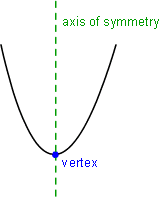
Every parabola has an Axis of symmetry and a Vertex for example :
In order to determine the axis of symmetry , when given an equation you need to solve for (x).
- to solve for (x); use the equation (-b/2a)
Try this :
y=x^2 +6x+8
First label each of the variables to make it more clear :
a=1
b=6
c=8
Now you can use these numbers to solve for the axis of symmetry:
-6/2(1) ----> -6/3 = -2
The axis of symmetry/(x) = -2
Now using the (x) value you can solve for the vertex by plugging it into the equation
y=(-2)^2 + 6(-2)+8
y=0
This gives you the coordinate of the vertex : (-2,0)
Workcite
Northstarmath, http://www.northstarmath.com/sitemap/parabola.html
Aim: How do we solve quadratic equations?
Every parabola has an Axis of symmetry and a Vertex for example :
In order to determine the axis of symmetry , when given an equation you need to solve for (x).
- to solve for (x); use the equation (-b/2a)
Try this :
y=x^2 +6x+8
First label each of the variables to make it more clear :
a=1
b=6
c=8
Now you can use these numbers to solve for the axis of symmetry:
-6/2(1) ----> -6/3 = -2
The axis of symmetry/(x) = -2
Now using the (x) value you can solve for the vertex by plugging it into the equation
y=(-2)^2 + 6(-2)+8
y=0
This gives you the coordinate of the vertex : (-2,0)
Workcite
Northstarmath, http://www.northstarmath.com/sitemap/parabola.html
Sunday, May 6, 2012
5/3/12 How do we find the area of sectors and other parts of a circle?
How do we find the area of sectors and other parts of a circle?
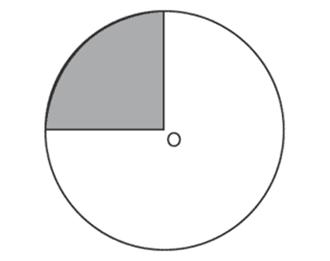
Sector of a circle
- a sector of a circle is the region between the radii and the arc of a sector
To find the area of a sector : # of degrees /360 x (pi) r^2
Ex:
Segment of a circle
- a segment of a circle is the region between a chord and arc of circle
To find the area of the segment of a circle : # of degrees/360 x (pi)r^ - 1/2bh
Ex:
Annulus
- an annulus is the region between two concentric circles
To find the area of the annulus : (pi)R^2- (pi)r1
Ex:
Practice question : If radius 1 is 12 and radius 2 is 6, What is the area of the annulus?
Citations
- Problem solving , http://www.p12.nysed.gov/ciai/mst/math/sampletasks/Math6Sample.htm
- Chord and segment of a circle, http://www.winpossible.com/lessons/Chord_and_Segment_Of_A_Circle.aspx, 2011
- Annulus calculator , http://www.calculatorsoup.com/calculators/geometry-plane/annulus.php
Sector of a circle
- a sector of a circle is the region between the radii and the arc of a sector
To find the area of a sector : # of degrees /360 x (pi) r^2
Ex:
Segment of a circle
- a segment of a circle is the region between a chord and arc of circle
To find the area of the segment of a circle : # of degrees/360 x (pi)r^ - 1/2bh
Ex:
Annulus
- an annulus is the region between two concentric circles
To find the area of the annulus : (pi)R^2- (pi)r1
Ex:
Practice question : If radius 1 is 12 and radius 2 is 6, What is the area of the annulus?
Citations
- Problem solving , http://www.p12.nysed.gov/ciai/mst/math/sampletasks/Math6Sample.htm
- Chord and segment of a circle, http://www.winpossible.com/lessons/Chord_and_Segment_Of_A_Circle.aspx, 2011
- Annulus calculator , http://www.calculatorsoup.com/calculators/geometry-plane/annulus.php
5/1/12 How do we use secant , chord and tangents in circles? ?
How do we use Secants, Chords and Tangents in circles?
Secant
- a line that cuts through or divides a curve into two or more parts
Ex:
Chord
- a straight line thats joins the ends of an arc
Ex :
Tangent
- straight line or plane that touches a curve or curved surface at a point
Ex:
Practice Question : What does the line TL image below represent?
Citations
- Chord , Wolfram MathWorld , http://mathworld.wolfram.com/Chord.html , 2012
- http://www.google.com/imgres?q=secant&start=173&um=1&hl=en&sa=N&biw=1280&bih=861&addh=36&tbm=isch&tbnid=Lo2YH7az3PTd1M:&imgrefurl=https://internal.shenton.wa.edu.au/maths/WestOne3CMAS/content/004_functions/media/glossary.html&docid=r1W_zcdlQ_KVDM&imgurl=https://internal.shenton.wa.edu.au/maths/WestOne3CMAS/content/004_functions/media/images/glossary_secant.gif&w=290&h=250&ei=QcymT8myJqGJ6QGyiaCdBA&zoom=1&iact=hc&vpx=606&vpy=126&dur=282&hovh=179&hovw=216&tx=126&ty=147&sig=100793830460579110965&page=8&tbnh=152&tbnw=195&ndsp=25&ved=1t:429,r:7,s:173,i:194
- Chapter 9: Chords and Arcs, http://whites-geometry-wiki.wikispaces.com/PETO626
- Geometry : Circles , http://www.sparknotes.com/math/geometry1/circles/section3.rhtml , 2012
Secant
- a line that cuts through or divides a curve into two or more parts
Ex:
Chord
- a straight line thats joins the ends of an arc
Ex :
Tangent
- straight line or plane that touches a curve or curved surface at a point
Ex:
Practice Question : What does the line TL image below represent?
Citations
- Chord , Wolfram MathWorld , http://mathworld.wolfram.com/Chord.html , 2012
- http://www.google.com/imgres?q=secant&start=173&um=1&hl=en&sa=N&biw=1280&bih=861&addh=36&tbm=isch&tbnid=Lo2YH7az3PTd1M:&imgrefurl=https://internal.shenton.wa.edu.au/maths/WestOne3CMAS/content/004_functions/media/glossary.html&docid=r1W_zcdlQ_KVDM&imgurl=https://internal.shenton.wa.edu.au/maths/WestOne3CMAS/content/004_functions/media/images/glossary_secant.gif&w=290&h=250&ei=QcymT8myJqGJ6QGyiaCdBA&zoom=1&iact=hc&vpx=606&vpy=126&dur=282&hovh=179&hovw=216&tx=126&ty=147&sig=100793830460579110965&page=8&tbnh=152&tbnw=195&ndsp=25&ved=1t:429,r:7,s:173,i:194
- Chapter 9: Chords and Arcs, http://whites-geometry-wiki.wikispaces.com/PETO626
- Geometry : Circles , http://www.sparknotes.com/math/geometry1/circles/section3.rhtml , 2012
How do we review transformations?
Isometry
- length is preserved
- sides are congruents ( like their reflecting)
Ex:
Direct isometry
- orientation is preserved( stays the same)
- The order of the lettering in the figure and the images are the same
- either clockwise becomes counter clockwise or counter clockwise becomes clockwise
- every translation and rotation is a direct isometry
Ex:
Opposite isometry
- orientation isn't preserved (changes)
- the order of the lettering is reversed
- every reflection and glide reflection is an opposite isometry
Ex:
Same orientation :
rorgin (x,y) -> (-x,-y)
R90 (x,y) -> (-y,x)
R180 ( x,y)-> (-x,-y)
R270 ( x,y) -> ( y,-x)
Reversed orientation:
r- x-axis (x,y) -> ( x,-y)
r-y-axis (x,y) ->(-x,y)
ry = x (x,y) -> ( y,x)
ry = -x (x,y) -> (-y,-x)
Practice question : What is the difference between a direct and opposite isometry?
Citations
- http://zsolania.blogspot.com/
- Haskell , Kenn, Functional Lens , http://www.kennknowles.com/blog/2007/12/03/calculating-the-reflect-rotate-translate-normal-form-for-an-isometry-of-the-plane-in-haskell-and-verifying-it-with-quickcheck/
Thursday, April 26, 2012
4/24/12 What are altitudes , perpendicular bisectors and angle bisectors?
What are Altitudes, Perpendicular bisectors and Angle bisectors?
Angle bisectors
- an angle bisector,bisects an angle in half creating two congruent angles
Ex:
Perpendicular Bisectors
- a line that cuts through another line going in the opposite direction or bisects a side
Ex:
Altitudes
- a line segment through a vertex that is perpendicular to a line containing side
- makes a right angle
- is the height of the triangle
Ex:
Practice question : If the given height of the triangle is 14, What is the length of the altitude ? Explain your answer.
Citations
-Triangle angle bisector theorem, Math warehouse ,http://www.mathwarehouse.com/geometry/similar/triangles/angle-bisector-theorem.php
- Perpendicular bisector - interactive applet , http://www.analyzemath.com/Geometry/PerpendicularBisector/PerpendicularBisector.html , April ,3 2011
- Triangles , bisectors and circumcircles - interactive applet , http://www.analyzemath.com/Geometry/Circumcircle/Circumcircle.html , April ,3 2011
- Miller , Maria , Altitude of a triangle , homeschoolmath.net , http://www.homeschoolmath.net/teaching/g/altitude.php , 2003-2012
Angle bisectors
- an angle bisector,bisects an angle in half creating two congruent angles
Ex:
Perpendicular Bisectors
- a line that cuts through another line going in the opposite direction or bisects a side
Ex:
Altitudes
- a line segment through a vertex that is perpendicular to a line containing side
- makes a right angle
- is the height of the triangle
Ex:
Practice question : If the given height of the triangle is 14, What is the length of the altitude ? Explain your answer.
Citations
-Triangle angle bisector theorem, Math warehouse ,http://www.mathwarehouse.com/geometry/similar/triangles/angle-bisector-theorem.php
- Perpendicular bisector - interactive applet , http://www.analyzemath.com/Geometry/PerpendicularBisector/PerpendicularBisector.html , April ,3 2011
- Triangles , bisectors and circumcircles - interactive applet , http://www.analyzemath.com/Geometry/Circumcircle/Circumcircle.html , April ,3 2011
- Miller , Maria , Altitude of a triangle , homeschoolmath.net , http://www.homeschoolmath.net/teaching/g/altitude.php , 2003-2012
Wednesday, April 25, 2012
4/18/12 How do you find the surface area and volume of a sphere?
How do you find the surface area and volume of a sphere?
Spheres
- a sphere is a set of all points in space equidistant from a point called the center
Ex :
- In order to calculate the surface area of a sphere use the formula : SA= 4(pi)r^2
- 'r' represents the radius of the sphere
In order to calculate the volume of a sphere use the formula : 4(pi)r^2/3
-'r' represents the radius
Practice question: If the given radius of a sphere is 4 , What is the surface area of the sphere?
Citations
Unit math example: ( Geometric solids) , http://www.unitmath.com/um/p/Examples/GeometricSolids/GeometricSolids.html , 9/10/2000
Spheres
- a sphere is a set of all points in space equidistant from a point called the center
Ex :
- In order to calculate the surface area of a sphere use the formula : SA= 4(pi)r^2
- 'r' represents the radius of the sphere
In order to calculate the volume of a sphere use the formula : 4(pi)r^2/3
-'r' represents the radius
Practice question: If the given radius of a sphere is 4 , What is the surface area of the sphere?
Citations
Unit math example: ( Geometric solids) , http://www.unitmath.com/um/p/Examples/GeometricSolids/GeometricSolids.html , 9/10/2000
Tuesday, April 24, 2012
3/29/12 How do we find the the surface area and lateral area of pyramids and cones?
How do we find the surface area and lateral area of pyramids and cones?
Pyramids
- a pyramid is a solid that connects a polygon base to a point
- the slant height of a pyramid is the height of the lateral faces
Ex :
- you can calulate the lateral area of a pyramid by using the formula LA= 1/2pl
-'p' represents the perimeter
-'l' represents the slant height
- You can calculate the surface area
Cones
- the base of a cone is circle and the other end ( vertex) is pointed similar to a pyramid
- the slant height of a cone is the distance from the vertex to a point on the base
Ex:
- to calculate the lateral area of a cone use the formula (pi)rl
- 'r' represents the radius
-'l' represents the slant height
- In order to calculate the surface area , and extra steps need to be included
- use the formula SA= LA(lateral area) + B (base)
- to find the base use (pi)r^2 , then plug in the final number in the formula above this one
Practice Question: If the radius of a cone 'r' is 4 and the slant height 'l' is 12 , What is the the lateral area of a cone?
Citations
- Geometry help!!! triangular pyramid , MHF,http://mathhelpforum.com/geometry/27562-solved-geometry-help-triangular-pyramid.html , 2005-2012
- Ring my bell- Volume of cone , Lesson poly , Silicon valley education foundation, http://www.lessonopoly.org/node/2299 , 2010
Pyramids
- a pyramid is a solid that connects a polygon base to a point
- the slant height of a pyramid is the height of the lateral faces
Ex :
- you can calulate the lateral area of a pyramid by using the formula LA= 1/2pl
-'p' represents the perimeter
-'l' represents the slant height
- You can calculate the surface area
Cones
- the base of a cone is circle and the other end ( vertex) is pointed similar to a pyramid
- the slant height of a cone is the distance from the vertex to a point on the base
Ex:
- to calculate the lateral area of a cone use the formula (pi)rl
- 'r' represents the radius
-'l' represents the slant height
- In order to calculate the surface area , and extra steps need to be included
- use the formula SA= LA(lateral area) + B (base)
- to find the base use (pi)r^2 , then plug in the final number in the formula above this one
Practice Question: If the radius of a cone 'r' is 4 and the slant height 'l' is 12 , What is the the lateral area of a cone?
Citations
- Geometry help!!! triangular pyramid , MHF,http://mathhelpforum.com/geometry/27562-solved-geometry-help-triangular-pyramid.html , 2005-2012
- Ring my bell- Volume of cone , Lesson poly , Silicon valley education foundation, http://www.lessonopoly.org/node/2299 , 2010
3/27/12 How do we find surface area and lateral area of prisms and cylinders?
How do we find surface area and lateral area of prisms and cylinders?
Prisms
- a prism is a solid figure with bases that are 2 congruent polygons
- the other sides of the prism are called lateral faces
- a prism is named by the shape of its bases
Ex:
- calculate the surface area of a prism by using the formula SA= LA+ 2B
- " LA" represents the lateral area
- " B' represents the base
- Calculate the lateral are of a prism by using LA = ph
- 'P' represents perimeter of a base
- 'H' represents the height
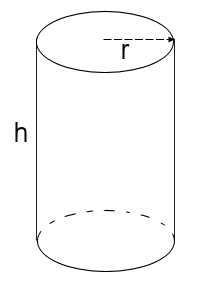
Cylinders
Ex:
- calculate the lateral area using the formula 2(pi)rh
-'r' represents the radius
-' h' represents the height
- In order to calculate the the surface area multiple steps are made
- calculate the area of the base by using (pi)r^2
- 'r' represents the radius
- multiple your answer by 2
- you then take your lateral area and add that with the number of the bases
- you can go by this formula to calculate the sureface area of a cylinder SA= LA +2B
-'LA' represents the lateral area
-'B' represents the base
Practice question : If the radius 'r' of a cylinder is 6 and the height ' h' is 4 , what is the lateral area of a cylinder?
Citations
-The 48 special crystal forms , University of wisconsin , greenbay , 1/20/11 , http://www.uwgb.edu/dutchs/symmetry/xlforms.htm
- Volume of a cylinder , Math homework series on geometry help , http://www.geometry-help.info/Volume_of_a_Cylinder.html, 2009
Prisms
- a prism is a solid figure with bases that are 2 congruent polygons
- the other sides of the prism are called lateral faces
- a prism is named by the shape of its bases
Ex:
- calculate the surface area of a prism by using the formula SA= LA+ 2B
- " LA" represents the lateral area
- " B' represents the base
- Calculate the lateral are of a prism by using LA = ph
- 'P' represents perimeter of a base
- 'H' represents the height
Cylinders
Ex:
- calculate the lateral area using the formula 2(pi)rh
-'r' represents the radius
-' h' represents the height
- In order to calculate the the surface area multiple steps are made
- calculate the area of the base by using (pi)r^2
- 'r' represents the radius
- multiple your answer by 2
- you then take your lateral area and add that with the number of the bases
- you can go by this formula to calculate the sureface area of a cylinder SA= LA +2B
-'LA' represents the lateral area
-'B' represents the base
Practice question : If the radius 'r' of a cylinder is 6 and the height ' h' is 4 , what is the lateral area of a cylinder?
Citations
-The 48 special crystal forms , University of wisconsin , greenbay , 1/20/11 , http://www.uwgb.edu/dutchs/symmetry/xlforms.htm
- Volume of a cylinder , Math homework series on geometry help , http://www.geometry-help.info/Volume_of_a_Cylinder.html, 2009
Subscribe to:
Posts (Atom)